Friday, July 19, 2013

REPOST: Did Cory Monteith Need More Care After Rehab?

Discovery News’ Paul Greenberg raised a question following the demise of young actor Cory Monteith: Would Monteith still be alive had he received follow-up care after rehab?

Image source: discovery.com

Following “Glee” star Cory Monteith’s death from a mixture of heroin and alcohol, there's renewed interest in how drug dependent individuals should re-enter society after completing treatment programs.

Monteith, who is from Canada, had struggled with substance abuse since his early teens, and had completed a drug rehab program in April. Since then he was widely photographed with his girlfriend, actress Lea Michele, at public events and on vacation in Puerto Vallarta, Mexico. He died in Vancouver.

The circumstances surrounding his death are seen by some addiction experts as evidence that he needed follow-up care and monitoring.

Dr. Ravi Chandiramani, medical director at Journey Healing Centers, in Scottsdale, Ariz. and Salt Lake City, said the treatment centers with the greatest records of success are those that take a holistic approach that includes a clear focus on follow-up care.

He also suggests that individuals should seek facilities that are fully accredited and that routinely include guidance in aftercare.

“We first recommend a good percent of the time that people must leave their home environment to seek treatment, because it may be the environment that contributed to their disease,” said Chandiramani.

“But as important as the treatment itself is, there must be a strong relapse prevention program and good aftercare planning during the time the individual is getting grounded in their sobriety. In Cory’s case there was probably not adequate time away from the environment that fostered his addiction. That could mean he simply did not have the required expertise with the tools he needed to recover.”

Monteith, 31, who had previously been through treatment for drug abuse when he was 19, completed the most recent stint on April 28. He then immediately left for the Mexican vacation with Michele.

The lack of follow-up care and monitoring may have contributed to Monteith’s death, but some experts lay the blame squarely at the doorway of the treatment facilities.

While it is not known what facility Monteith used, Dr. Carl Hart, author of “High Price: A Neuroscientists Journey of Self-Discovery that Challenges Everything You Know about Drugs and Society,” said simple ignorance may have played a part in Monteith’s death.

“He didn’t die because he was using heroin,” said Hart, a professor of psychology at Columbia University and substance abuse research scientist at the New York State Psychiatric Institute, as well as a member of the National Advisory Council on Drug abuse.

“He died because he combined it with alcohol. In treatment programs, people sometimes do not get the proper education. The 28-day approach to drug rehab is ignorant because when people are addicted to drugs they have problems, but we act as though the drug is their problem. There are problems in their life in general, even without that drug, but often in treatment professionals act as if the drug is the whole problem.”

Monteith’s drug use reportedly began after his parents divorced. When he became a public figure, he was open about his ongoing struggle with drugs. While his family, girlfriend and colleagues are all reported to have been fully supportive of his efforts to recover, Chandiramani believes that those who comprised his support system needed to be involved in his treatment and recovery.

“The ideal would be to have had those family members integrated into the treatment process,” he said. “They typically are given fundamental education on the disease of addiction, along with information on relapse prevention."

"Individuals in the spotlight like Cory find themselves overcompensating when they leave treatment so they don’t lose their fame, credibility or opportunity for additional success. That puts more pressure on them, and often they don’t get the foundation of recovery that they need to build on before they jump head first right back into their previous environment.”

Dr. Samuelle Klein Von Reiche is a psychotherapist from Clifton, New Jersey. Learn more about her expertise from her official website.

Wednesday, May 29, 2013

REPOST: Stress Can Boost Good Habits Too

Many people may not realize it but there is a silver lining to experiencing stress. Maia Szalavitz of TIME discusses a study about this on this article:

(UPDATED) Under stress, we all tend to seek comfort — sometimes in not-so-healthy ways — but a new study suggests that challenging experiences are as likely to promote good habits as they are to support bad ones.
In several different experiments, researchers including* Wendy Wood, a professor of psychology and business at the University of Southern California, found that under various types of stress, all types of habits got stronger — not just the ones that cause trouble.
“When your willpower is low and you have little motivational energy, you are likely to fall back into old, bad habits of eating too much and not exercising — but only if those are, in fact, your habits,” says Wood. “Our novel finding is that people fall back into good habits in just the same way.” The study was published in the Journal of Personality and Social Psychology.
Stress depletes willpower; indeed, the brain is wired so that extreme stress actually shuts down the higher regions involved in long-term planning and thoughtful consideration. That’s because those functions are superfluous when survival is at stake. When under threat, the brain relies on faster, more primitive regions whose behavior is largely automatic under such circumstances. Automatic doesn’t mean built-in, however: many of our automatic behaviors, like riding a bike or eating french fries when feeling anxious, become automatic through repetition.
“People can’t make decisions easily when stressed, are low in willpower or feeling overwhelmed,” Wood says. “These pressures limit our capacity to make decisions.” The default in those cases is to engage in habitual behavior, so, she says, “When you are too tired to make a decision, you tend to just repeat what you usually do.” And it doesn’t matter what that habit is.
The new research involved various types of habits and stresses. In one experiment, 65 UCLA students were followed for 10 weeks and asked about their breakfast and news-reading habits. During the first few weeks, they recorded how often they ate foods that they considered healthy, such as cold cereal, hot cereal and health bars. They also reported on their intake of what they labeled as unhealthy breakfast selections, including pastries, pancakes and French toast. In addition, they detailed whether they regularly read educational news sections like local and national news, or lighter fare like advice columns and comics.
The scientists gathered this data over several weeks, measuring how strong the students’ breakfast and news habits were at times when they weren’t facing stressful exams like midterms and finals. Later, they compared these choices with those made during exam periods.
And indeed, those who had strong habits — either healthy or unhealthy — engaged in those behaviors more when they felt stressed by exam periods. Whether it was eating French toast or health bars more regularly or reading news that they felt was important or a guilty pleasure, habitual behaviors increased under stress.

 
Image Source: time.com


A second experiment involved 72 students at Duke University. This time, they were asked to specify goals they were hoping to achieve, such as improving grades or fitness. They also detailed particular behaviors they engaged in regularly to reach their goals, as well as behaviors that might get in the way.
For two of the four days of the study, they were randomly assigned to try to perform as much of their daily behavior as reasonably possible using their nondominant hand. This task tends to deplete self-control because it requires inhibiting a strong habit. Once again, this stressful experience increased habitual behavior — whether it worked toward or against the students’ goals.
Another experiment, this one including 164 UCLA students who tracked their study skills, found that those with the lowest levels of self-control were most likely to have strong habits, but it wasn’t clear whether having less self-control led people to engage in more habitual behavior in the first place or whether relying more on habit reduces self-control.
“Our data show that stress and low willpower increased performance of both good and bad habits,” Wood says. “And this happened following all kinds of events that drain willpower — taking exams, completing difficult mental tasks, trying to perform everyday activities in an unusual way. Even people with chronically low levels of willpower and self-control relied more on habits.”
So why does it seem that only bad habits emerge when we face the cauldron of stress? Wood says it’s a matter of attention. “We don’t notice so much when we fall back into good habits — these are the ones that are working for us to meet our goals, and so they aren’t problematic. It’s the bad habits we focus on, and thus people are more aware of falling back into bad habits when their willpower is low.” The bad habits stand out more, in other words, because they tend to derail us from achieving our goals.
The findings may prove useful for reinforcing good habits that we cultivate to help our health. But that requires taking the time to establish these healthy behaviors before a challenging situation strikes. If you want your default to be to exercise when you stress out — rather than reaching for a doughnut — you have to hit the gym repeatedly.
“Getting enough exercise, eating right, getting enough sleep, not smoking — all of these should become an unthinking, automatic part of your day,” Wood says. “If they are, then you will continue to perform them even when your willpower is low and you can’t muster the energy to ‘do the right thing’ for your health.” The fact that habits are hard to break can work for you or against you.
Visit this Facebook page for Dr. Sam Klein Von Reiche for more updates on related topics.

Monday, May 6, 2013

Death by soda addiction: The Natasha Harris case

Image source: grist.wordpress.com

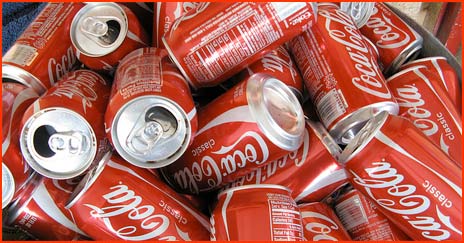
A mother of eight, Natasha Harris succumbed to cardiac arrhythmia, or as science would put it lightly, the irregular beating of the heart. Three years after her untimely death, coroner David Crerar concluded that the sugar and caffeine she had obtained from soda addiction when she was still alive played a big role in putting her heartbeat to a sudden halt.

Image source: onsugar.com

Soda addiction is no longer new to addiction specialists. But many individuals are still unaware of its fatal effects. In the medical field, food and drinks—or any substance for that matter–become addictive when a person suffers from withdrawal symptoms after not consuming or choosing to stop taking the food or substance they are dependent on. Harris’ husband admitted that his wife suffered from retching, if not vomiting, and she would get moody if she did not have her favorite soda. However, her family never thought of soda as “deadly,” and the brand of the soda she used to drink has no health warning on its bottles.

Image source: treatment4addiction.com


The soda company’s answer to the case was very reasonable: anything that is taken in excess is certainly not good for the health. Conversely, the coroner assigned to the case said that even though sugar and caffeine’s capacity to be considered fatal remains a debatable idea, the soda brand still needs to be responsible for not emphasizing the hazards of taking its product excessively.

Image source: Bloomberg

But if there is something to be had from Harris’ case, it is learning how to control the urge to eat or drink more than what’s enough.


Dr. Samuelle Klein Von Reiche is a psychotherapist based in Clifton, New Jersey. Her website provides more information on how to recover from any kind of addiction.

Wednesday, April 10, 2013

REPOST: From Sleep Study, Clues to Happiness

Much study has been done on the cause and source of happiness. Now, it seems sleep may hold important clues to the main emotion most people wish to experience while awake.

Image source: New York Times
A little over a decade ago, scientists discovered that narcolepsy, the neurological disorder that leads to episodes of irresistible sleepiness, is caused by the loss of brain cells that produce hypocretin, a neurotransmitter that promotes wakefulness.
But the discovery did not shed light on two other mysterious problems associated with the disorder. Narcoleptics have profoundly high rates of depression — up to six times the rate in the general population — and they have a tendency to collapse when swept by some emotions, a phenomenon known as cataplexy.
Now research shows that in addition to regulating sleep, hypocretin also appears to govern emotion, particularly experiences of joy and happiness.
The study has implications that extend beyond narcolepsy. It suggests that the brain has several different arousal systems, and that one of them, driven by hypocretin, has the specific function of keeping people awake for pleasure.
It also raises concerns that drugs that block hypocretin could potentially cause depression and other unexpected side effects. One such medication, a sleeping pill from Merck called suvorexant that works by blocking hypocretin, essentially causing narcolepsy for a night, is awaiting government approval.
The new research, published this month in the journal Nature Communications, involved a small group of patients with epilepsy who had special electrodes implanted in their brains that could directly monitor seizure activity and hypocretin levels around the clock.
“Apart from their seizure disorder, these patients were normal,” said Dr. Jerome Siegel of the V.A. greater Los Angeles Healthcare System, the study leader and a psychiatry professor at U.C.L.A. “They’re watching TV, they’re talking to their relatives, walking around the hospital, going to the bathroom. They’re not mentally handicapped in any way, and we are observing them with video and periodically asking them to complete forms indicating how they feel – whether they’re happy or sad, hungry or thirsty, in pain or not.”
Dr. Siegel, along with graduate student Ashley Blouin and their colleagues, expected to find that the ebb and flow of hypocretin mirrored the sleep cycle, rising in the morning and falling at night.
“But what we found was more complex,” Dr. Siegel said. “The maximal release of hypocretin was not really related to arousal in the usual way. It happened during waking for sure, but the maximal release was simply when people reported they were happy.”
The findings showed that hypocretin levels surged when the patients experienced joy and pleasure – while watching a favorite team win a baseball game, for example, or spending time with family. But when they experienced pain from their surgical implant, or anxiety about their medical situation, their levels of hypocretin fell.
Dr. Siegel has shown in animal studies that hypocretin is associated with reward-seeking behavior. Release a dog into a yard to run, dig and play, and its hypocretin levels soar. But force the same dog to run on a treadmill, and its hypocretin levels remain flat. Similarly, hypocretin levels fall when mice are forced to press a bar to escape an unpleasant shock, but spike when the same animals press a bar to obtain food.
“This shows that hypocretin is related to a particular kind of arousal,” said Dr. Siegel. “There is an arousal system in the brain whose function is keeping you awake for pleasure, to get rewards. It is related to positive affect, and in its absence you have a deficit in pleasure seeking.”
In narcoleptics, cataplexy is most frequently caused by sudden joy. It is not uncommon to see someone with narcolepsy abruptly lose all muscle tone and collapse when laughing.
But in some ways, we can all relate.
“In almost every culture there’s an expression equivalent to falling down with laughter,” Dr. Siegel said. “Normal individuals don’t actually fall down. They may brace themselves or sit down. But narcoleptics will feel weak and unable to speak. In some instances they’ll fall down and won’t be able to get up for a few minutes.”
In most people, laughter causes a surge of hypocretin, which maintains muscle tone. But in narcoleptics, the hormone is largely absent, and the system goes haywire.
In narcoleptics, the loss of this pleasure-seeking hormone has severe effects on mood. Narcoleptics are prone to depression, and they have a strange resistance to addiction. Some of the medications used to treat narcolepsy are notoriously addictive, like amphetamines and GHB, the so-called date-rape drug. Yet narcoleptics generally do not abuse them.
“They’re missing this working-for-pleasure system,” Dr. Siegel said. “When hypocretin is missing, you have a deficit in getting addicted and a deficiency in getting interested in things — that’s what depression is.”
So, could a sleep aid like suvorexant, which reduces hypocretin, lead to depression in a healthy person? In clinical trials involving thousands of patients, the drug helped people with insomnia fall asleep faster and stay asleep longer than placebo. And there were no signs that it induced depression or caused falls resembling cataplexy, said Dr. Darryle Schoepp, senior vice president at Merck.
“We had to measure psychiatric mood, including depression,” he said, “and we didn’t see anything worrisome there.”
But Dr. Siegel said it is too soon to say that tinkering with hypocretin will not create unwanted consequences.
“The initial reports are rosy,” he said. “But they come from a drug company with an enormous investment. And there is a long list of drugs acting on the brain whose severe problems were only identified after millions of people were taking them.”

Follow this Twitter account for more tips about living happy from Dr. Samuelle Klein Von Reiche.

Friday, March 15, 2013

On May-December affair: When age is just a number

For a nation that is numbed by everyday May-December showbiz affair scenarios on TV and on the Web, it is strange to hear of some Americans who still view this kind of relationship inacceptable, if not repugnant.
But whether “age-gap” relationships are widely accepted or not these days, a more realistic fact arises: there will always be couples with differences in years and generations that would want to give the relationship a try.

The reason: most people know that a relationship’s longevity, strength, and depth are not determined by years that separate the ages of the two persons involved in it.

Image source: sheknows.com

The role of open communication

The gap that may ensue from a large age difference may form when the two individuals involved in the relationship start highlighting each other’s interests. Perhaps the common scenario is when one wants to party all night while the other just wants to stay in bed and read a good book or when one craves wine while the other, chocolate. The solution: they should talk openly about their interests and, for the benefit of each other, do some of them together.

Image source: womanatics.com

Open communication narrows down a couple’s gap on each other’s respective orientation on things. Indeed, the issue of religion, sex, financial handling, political belief, or raising a child may affect a May-December affair. But being open beats everything. It also helps a couple find strength and comfort from each other when everyone seems to question their love, the years between them.

Image source: ymuchomas.wordpress.com

Dr. Samuelle Klein Von Reiche is a New Jersey-based therapist whose expertise includes couples therapy.

Tuesday, February 5, 2013

When couples play the innuendo game


“Two people can sleep in the same bed and still be alone when they shut their eyes.”— Haruki Murakami

Perhaps the Japanese writer is right. Perhaps these words are the product of one common scenario in a home that houses a couple who hasn’t talked straightforwardly and honestly for a long time. These are couples who begin and end their day with innuendo, with ambiguous remarks, and with never-ending silence.

Why do such things happen?

Maybe it is just natural for two breathing entities to end up feeling confined by the idea of being with the same person every day: same answers, same opinions on things, same old thoughts—nothing new. Maybe it is just human nature that reminds them apiece that seeing the same face over and over again on a daily basis is a perfect way to feel cloyed and annoyed. It is possible that humans are basically just human beings, imperfect, hard to please, and always looking for something new.

Image source: cbc.ca

Space

It is a cliché, but every relationship needs one. Sometimes, giving the nightly sleeping together in one bed a break can help, and not seeing each other during meal time is fine, too. However, that “space” should not be an expansive and sprawling one; couples have to be sure that it is just a “gap,” a brief and momentary truce from speaking. Otherwise, if they fail to reconcile each other’s differences through communicating each other’s opinions and feelings, the “gap” will turn into a “chasm.”

A lot of times, it is all about rekindling the friendship that binds the relationship. How would they do it?

Simple: by talking.

Image source: thecalmspace.com

Dr. Samuelle Klein Von Reiche is a New Jersey-based therapist. This Facebook page provides links to articles on related topics.

Monday, January 7, 2013

REPOST: The H Factor of Personality

This feature discusses a new model that tries to examine and understand more deeply the human personality, with special emphasis on the personality dimension called "Honesty/Humility." The entire article can be read at www.eurekalert.org.
Why some people are manipulative, self-entitled, materialistic, and exploitive – and why it matters for everyone; that's the sub-title of the new book The H Factor of Personality, written by psychology professors Kibeom Lee from the University of Calgary and Michael C. Ashton from Brock University. With a hook like that, there's no wonder it is attracting attention across the psychological community and into the mainstream.

The H Factor refers to the personality dimension called Honesty/Humility. People with higher levels of H are sincere and unassuming, and people with lower levels are deceitful and conceited. People with a "low H" personality tend to cause a lot of problems for other people and for society, but they aren't as easy to spot as we might think they are. In many cases, you need to know someone well before you have a clear idea of their H Factor level, say Lee and Ashton. And although some low H people end up as common criminals, most don't. Some even turn up in positions of power and trust.

As scholars in the field of personality psychology, Lee and Ashton were immersed in the concept of "Big Five" personality factors in 1997 when they were completing their Ph.Ds at the University of Western Ontario. The idea of the Big Five is that the human personality consists of five overarching personality groups of traits.

Recognizing that Big Five was based on hundreds of related personality traits identified within the English language, Lee and Ashton wondered whether the same model would emerge if applied to other languages. When they began examining research results from many different cultures, they were surprised to find that there were six large groups of traits. That sixth group of traits was the H Factor, Honesty/Humility. Building on this discovery, the two researchers developed a new model for understanding the human personality.

The HEXACO model is an acronym for the names of the six factors: Honesty/Humility, Emotionality, Extraversion, Agreeableness, Conscientiousness and Openness to Experience. Five of the six factors are largely similar to those of the Big Five. Proponents of the HEXACO model have argued that it is a better-rounded measure of human personality because it incorporates an individual component for virtues and ethics.

This engaging book, written for a general audience, explores the importance of the H Factor in various aspects of people's lives and shows how that personality dimension can affect an individual's approach to money, power and sex; inclination to commit crimes, and attitudes about society, politics and religion.

The book also provides clues for identifying low H people and some of those clues may be surprising. Readers of The H Factor will start seeing people through a different lens.

Personal transformation coach Sam Klein Von Reiche helps her clients become better individuals. Read updates on this Twitter page to learn more insights on personal development.