Wednesday, April 10, 2013

REPOST: From Sleep Study, Clues to Happiness

Much study has been done on the cause and source of happiness. Now, it seems sleep may hold important clues to the main emotion most people wish to experience while awake.

Image source: New York Times
A little over a decade ago, scientists discovered that narcolepsy, the neurological disorder that leads to episodes of irresistible sleepiness, is caused by the loss of brain cells that produce hypocretin, a neurotransmitter that promotes wakefulness.
But the discovery did not shed light on two other mysterious problems associated with the disorder. Narcoleptics have profoundly high rates of depression — up to six times the rate in the general population — and they have a tendency to collapse when swept by some emotions, a phenomenon known as cataplexy.
Now research shows that in addition to regulating sleep, hypocretin also appears to govern emotion, particularly experiences of joy and happiness.
The study has implications that extend beyond narcolepsy. It suggests that the brain has several different arousal systems, and that one of them, driven by hypocretin, has the specific function of keeping people awake for pleasure.
It also raises concerns that drugs that block hypocretin could potentially cause depression and other unexpected side effects. One such medication, a sleeping pill from Merck called suvorexant that works by blocking hypocretin, essentially causing narcolepsy for a night, is awaiting government approval.
The new research, published this month in the journal Nature Communications, involved a small group of patients with epilepsy who had special electrodes implanted in their brains that could directly monitor seizure activity and hypocretin levels around the clock.
“Apart from their seizure disorder, these patients were normal,” said Dr. Jerome Siegel of the V.A. greater Los Angeles Healthcare System, the study leader and a psychiatry professor at U.C.L.A. “They’re watching TV, they’re talking to their relatives, walking around the hospital, going to the bathroom. They’re not mentally handicapped in any way, and we are observing them with video and periodically asking them to complete forms indicating how they feel – whether they’re happy or sad, hungry or thirsty, in pain or not.”
Dr. Siegel, along with graduate student Ashley Blouin and their colleagues, expected to find that the ebb and flow of hypocretin mirrored the sleep cycle, rising in the morning and falling at night.
“But what we found was more complex,” Dr. Siegel said. “The maximal release of hypocretin was not really related to arousal in the usual way. It happened during waking for sure, but the maximal release was simply when people reported they were happy.”
The findings showed that hypocretin levels surged when the patients experienced joy and pleasure – while watching a favorite team win a baseball game, for example, or spending time with family. But when they experienced pain from their surgical implant, or anxiety about their medical situation, their levels of hypocretin fell.
Dr. Siegel has shown in animal studies that hypocretin is associated with reward-seeking behavior. Release a dog into a yard to run, dig and play, and its hypocretin levels soar. But force the same dog to run on a treadmill, and its hypocretin levels remain flat. Similarly, hypocretin levels fall when mice are forced to press a bar to escape an unpleasant shock, but spike when the same animals press a bar to obtain food.
“This shows that hypocretin is related to a particular kind of arousal,” said Dr. Siegel. “There is an arousal system in the brain whose function is keeping you awake for pleasure, to get rewards. It is related to positive affect, and in its absence you have a deficit in pleasure seeking.”
In narcoleptics, cataplexy is most frequently caused by sudden joy. It is not uncommon to see someone with narcolepsy abruptly lose all muscle tone and collapse when laughing.
But in some ways, we can all relate.
“In almost every culture there’s an expression equivalent to falling down with laughter,” Dr. Siegel said. “Normal individuals don’t actually fall down. They may brace themselves or sit down. But narcoleptics will feel weak and unable to speak. In some instances they’ll fall down and won’t be able to get up for a few minutes.”
In most people, laughter causes a surge of hypocretin, which maintains muscle tone. But in narcoleptics, the hormone is largely absent, and the system goes haywire.
In narcoleptics, the loss of this pleasure-seeking hormone has severe effects on mood. Narcoleptics are prone to depression, and they have a strange resistance to addiction. Some of the medications used to treat narcolepsy are notoriously addictive, like amphetamines and GHB, the so-called date-rape drug. Yet narcoleptics generally do not abuse them.
“They’re missing this working-for-pleasure system,” Dr. Siegel said. “When hypocretin is missing, you have a deficit in getting addicted and a deficiency in getting interested in things — that’s what depression is.”
So, could a sleep aid like suvorexant, which reduces hypocretin, lead to depression in a healthy person? In clinical trials involving thousands of patients, the drug helped people with insomnia fall asleep faster and stay asleep longer than placebo. And there were no signs that it induced depression or caused falls resembling cataplexy, said Dr. Darryle Schoepp, senior vice president at Merck.
“We had to measure psychiatric mood, including depression,” he said, “and we didn’t see anything worrisome there.”
But Dr. Siegel said it is too soon to say that tinkering with hypocretin will not create unwanted consequences.
“The initial reports are rosy,” he said. “But they come from a drug company with an enormous investment. And there is a long list of drugs acting on the brain whose severe problems were only identified after millions of people were taking them.”

Follow this Twitter account for more tips about living happy from Dr. Samuelle Klein Von Reiche.

Friday, March 15, 2013

On May-December affair: When age is just a number

For a nation that is numbed by everyday May-December showbiz affair scenarios on TV and on the Web, it is strange to hear of some Americans who still view this kind of relationship inacceptable, if not repugnant.
But whether “age-gap” relationships are widely accepted or not these days, a more realistic fact arises: there will always be couples with differences in years and generations that would want to give the relationship a try.

The reason: most people know that a relationship’s longevity, strength, and depth are not determined by years that separate the ages of the two persons involved in it.

Image source: sheknows.com

The role of open communication

The gap that may ensue from a large age difference may form when the two individuals involved in the relationship start highlighting each other’s interests. Perhaps the common scenario is when one wants to party all night while the other just wants to stay in bed and read a good book or when one craves wine while the other, chocolate. The solution: they should talk openly about their interests and, for the benefit of each other, do some of them together.

Image source: womanatics.com

Open communication narrows down a couple’s gap on each other’s respective orientation on things. Indeed, the issue of religion, sex, financial handling, political belief, or raising a child may affect a May-December affair. But being open beats everything. It also helps a couple find strength and comfort from each other when everyone seems to question their love, the years between them.

Image source: ymuchomas.wordpress.com

Dr. Samuelle Klein Von Reiche is a New Jersey-based therapist whose expertise includes couples therapy.

Tuesday, February 5, 2013

When couples play the innuendo game


“Two people can sleep in the same bed and still be alone when they shut their eyes.”— Haruki Murakami

Perhaps the Japanese writer is right. Perhaps these words are the product of one common scenario in a home that houses a couple who hasn’t talked straightforwardly and honestly for a long time. These are couples who begin and end their day with innuendo, with ambiguous remarks, and with never-ending silence.

Why do such things happen?

Maybe it is just natural for two breathing entities to end up feeling confined by the idea of being with the same person every day: same answers, same opinions on things, same old thoughts—nothing new. Maybe it is just human nature that reminds them apiece that seeing the same face over and over again on a daily basis is a perfect way to feel cloyed and annoyed. It is possible that humans are basically just human beings, imperfect, hard to please, and always looking for something new.

Image source: cbc.ca

Space

It is a cliché, but every relationship needs one. Sometimes, giving the nightly sleeping together in one bed a break can help, and not seeing each other during meal time is fine, too. However, that “space” should not be an expansive and sprawling one; couples have to be sure that it is just a “gap,” a brief and momentary truce from speaking. Otherwise, if they fail to reconcile each other’s differences through communicating each other’s opinions and feelings, the “gap” will turn into a “chasm.”

A lot of times, it is all about rekindling the friendship that binds the relationship. How would they do it?

Simple: by talking.

Image source: thecalmspace.com

Dr. Samuelle Klein Von Reiche is a New Jersey-based therapist. This Facebook page provides links to articles on related topics.

Monday, January 7, 2013

REPOST: The H Factor of Personality

This feature discusses a new model that tries to examine and understand more deeply the human personality, with special emphasis on the personality dimension called "Honesty/Humility." The entire article can be read at www.eurekalert.org.
Why some people are manipulative, self-entitled, materialistic, and exploitive – and why it matters for everyone; that's the sub-title of the new book The H Factor of Personality, written by psychology professors Kibeom Lee from the University of Calgary and Michael C. Ashton from Brock University. With a hook like that, there's no wonder it is attracting attention across the psychological community and into the mainstream.

The H Factor refers to the personality dimension called Honesty/Humility. People with higher levels of H are sincere and unassuming, and people with lower levels are deceitful and conceited. People with a "low H" personality tend to cause a lot of problems for other people and for society, but they aren't as easy to spot as we might think they are. In many cases, you need to know someone well before you have a clear idea of their H Factor level, say Lee and Ashton. And although some low H people end up as common criminals, most don't. Some even turn up in positions of power and trust.

As scholars in the field of personality psychology, Lee and Ashton were immersed in the concept of "Big Five" personality factors in 1997 when they were completing their Ph.Ds at the University of Western Ontario. The idea of the Big Five is that the human personality consists of five overarching personality groups of traits.

Recognizing that Big Five was based on hundreds of related personality traits identified within the English language, Lee and Ashton wondered whether the same model would emerge if applied to other languages. When they began examining research results from many different cultures, they were surprised to find that there were six large groups of traits. That sixth group of traits was the H Factor, Honesty/Humility. Building on this discovery, the two researchers developed a new model for understanding the human personality.

The HEXACO model is an acronym for the names of the six factors: Honesty/Humility, Emotionality, Extraversion, Agreeableness, Conscientiousness and Openness to Experience. Five of the six factors are largely similar to those of the Big Five. Proponents of the HEXACO model have argued that it is a better-rounded measure of human personality because it incorporates an individual component for virtues and ethics.

This engaging book, written for a general audience, explores the importance of the H Factor in various aspects of people's lives and shows how that personality dimension can affect an individual's approach to money, power and sex; inclination to commit crimes, and attitudes about society, politics and religion.

The book also provides clues for identifying low H people and some of those clues may be surprising. Readers of The H Factor will start seeing people through a different lens.

Personal transformation coach Sam Klein Von Reiche helps her clients become better individuals. Read updates on this Twitter page to learn more insights on personal development.

Tuesday, December 11, 2012

Fighting depression is like training athletes

One of the many conditions that Dr. Samuelle Klein Von Reiche and other psychotherapists usually encounter is clinical depression. Caused by different factors, depression is a serious matter as it can not only lead to the deterioration of physical health, it can also destroy personal relationships.

Image credit: cbc.ca

Treatments for depression vary, depending on the psychologist and the personality of the patient. Some psychotherapists even adapt techniques from other fields of study to create an effective treatment for depression. Such is the case with Dr. Alastair Dobbin, who utilizes sports psychology to treat anxiety and depression.

According to Dr. Dobbin, the psychology behind training athletes mainly mirrors the battle against depression in the sense that sportsmen are taught to develop resilience—to come out strong even after a difficult fight.

Image credit: sportscene.tv

“It’s about being able to bounce back [after] a bad performance,” he says.

Dr. Dobbin, along with public health specialist Sheila Ross, developed a self-help program that zeroes in on the potency of the confidence-building techniques used by Olympic athletes. By studying these methods, they came up with CDs that help patients become mentally tough.

Psychological characteristics that are usually exhibited by psychologically strong athletes include:

• A strong confidence in their ability to perform well
• Motivates one’s self to become successful
• Has the ability to focus one’s thoughts and feelings unfailingly
• Remains calm even under pressure

Image credit: optimumtennis.net

With help from psychologists, people fighting depression can develop these characteristics, strengthening their minds and preparing them for a brighter future.

Learn more about psychology by visiting this website.

Monday, November 12, 2012

Shhhhh ... Some secrets you might need to keep

This article by Elizabeth Landau was published online at cnn.com. It talks about situations where it might be better to withhold information from people.


Strangers often trust Edward with their secrets, whether it be on planes or walking down the street. He even became a confidant in one place that he doesn't want most people to know he spent time: prison.

Edward's biggest secret is that he is a convicted felon, having been arrested twice for driving under the influence of alcohol. The second time, he spent 90 days behind bars contemplating his life.

Those reflections helped him make better life choices in the 10 years that have gone by since, he says. But he belongs to a professional organization that would boot him immediately if anyone there ever found out about his conviction, and he still fears that someone in it will discover what he's hiding. Edward, and the others who agreed to speak about their personal experiences for this article, asked that their real names not be used to protect their identities.

"It's not shame that's the reason I'm holding secrets in, especially with the DUI," says Edward, 35, who lives in the Midwest. "It's more about, I don't feel like getting into the story again to have to explain why I'm not your typical felon" -- a violent or sexual offender.

While he says he feels no guilt or shame about his criminal record, he laments he can probably never run for public office because his secret would emerge.
People keep secrets for all kinds of reasons.

Sam von Reiche, psychologist and success coach located in northern New Jersey, believes everyone has secrets to some extent.

"We all end up with some sense internally that we've done something wrong, or that there's something wrong about us and a little deceptive," she said. "I think that's just part of the human condition."

Generally, says von Reiche, "secrets do create a lot of separation from other people, and they also prevent you from feeling truly authentic." But psychologists say there are also situations where it might be better to withhold information from people, even close friends, if the revelation of secrets would cause more pain to you and others.

Abuse
Nancy, 21, is still dealing with her feelings toward her ex-boyfriend, who physically abused her. They were together for four months in college and then broke up -- at least, that's what Nancy's friends thought.

But secretly, Nancy went back to him after one week. She didn't want her friends to know because she knew they would think it was a bad idea.
"I was just convinced that he was going to change, and it was my fault," she said.

But he didn't change. Three months later, Nancy's relationship ended when, she says, she had to call the police because of his abuse.

Nancy, who also lives in the Midwest, has seen a therapist, but secretly longs for her ex despite the abuse. She found a website called Secret Regrets where people can anonymously share situations that no one knows about.

"I regret not being able to let you go," Nancy wrote in a post. "I came back to you for the second time when I knew exactly what was going to happen."

Kevin Hansen, who founded Secret Regrets, has collected about 25,000 confessions from people who are hiding something from a lot of people. The sentiment among many of them, he says, is "nobody else could possibly understand what I'm going through, so I'm not going to tell anyone." Anonymity makes it more comfortable.

Hansen "has always been passionate about helping people," according to the website. He studied psychology and human behavior while earning a business degree, "and now, he's discovered an amazing way to reach people struggling with the biggest regrets of their lives, and connect them with others who know what they're going through."

The feedback from other anonymous users has helped, Nancy said. Some of the messages said things such as "you got out a lot sooner than me."

Anyone who has secrets about abuse should seek professional help, says Bobbie McDonald, a psychologist in Newport Beach, California. Revealing details of an ongoing situation can be risky, as an abuser's behavior can be unpredictable. A counselor, psychologist or expert at a hotline can help put the person in touch with the right resources.

Abortion
Irene, 23, found out she was pregnant in August 2009. Her boyfriend at that time didn't want her to keep the child. Initially she wanted to go forward with the pregnancy, though she later changed her mind.

Irene, who lives in the South, didn't tell anyone in her family about the pregnancy until after the fact. Her mother didn't speak to her for two weeks, but eventually calmed down, she said.

Everyone she has told has been supportive about it, but it's not something she shares with everyone. Her grandparents, for instance, still don't know. Like Nancy, she found support on the Secret Regrets website, where women in their 60s tell her things will get easier with time.

The pregnancy and abortion used to be a source of shame, and Irene used to cry about it a lot. These days, she is able to tell herself that she made the right decision. She was able to finish school and move on from a dysfunctional relationship with her former boyfriend.

"Self-forgiveness is always critical to helping someone move past whatever secret that is," von Reiche said. She sometimes gives clients take-home exercises -- write down 15 reasons that you forgive yourself, for example.

Lifestyle choices
The skeletons that Rachel keeps in her closet are actually costumes. Tucked away in her studio apartment are a wolf's head and a full leopard outfit.

Rachel, 26, doesn't want her co-workers to know that she's a "furry."

Portrayals in popular culture may suggest the furry movement is about having sex in animal costumes, but for some people that's not part of it at all, she said.

Individuals may define "furry" differently, but in Rachel's view, furry fandom consists of people who enjoy cartooning, fantasy and humanized creatures. It's a way of identifying yourself through animal characteristics, she said, and some furries just appreciate the artwork.

Rachel herself lives in the Midwest and is an artist on the side, drawing humanized animal characters. She particularly identifies with the hyena that she draws a lot.

As much as she enjoys going to furry conventions, she tries to keep that under wraps at work. She's a manager at a Web software company and wants to maintain a certain level of professionalism.

"If people knew I had this whimsical side that likes to dress up and goof off, and that I draw cartoons in my spare time, that might seem kind of off-kilter," she said.

It's important for people to be comfortable and confident with all parts of themselves, McDonald says. But there are situations where revealing part of your identity would do more harm than good.

"It can be unhealthy to reveal certain parts of ourselves if there are people close to us that would be very unaccepting of it, because of the pain and the separation that that would cause to reveal that," McDonald said.

Affairs
"My biggest regret is that I ever started cheating on my husband," says a post on the Secret Regrets site. "Every time I do it, I say it's the last time, but it never is. I don't know how to stop, and I feel so guilty about it."

It's a secret that psychologists often hear -- that someone has cheated on a spouse.

If it's a one-time transgression -- perhaps a fling on a business trip -- it might be worth keeping that a secret from your partner, said Karen Sherman, a psychologist in Long Island, New York.

Some therapists might say honesty is important if there is to be healing in the relationship, Sherman said. But her own view is that it depends on the individual case. "Sometimes there really is more damage caused by telling it," she said.

However, if you're involved in an ongoing affair and living a duplicitous life, you should end one relationship or the other, McDonald said. "I think it's important to really take the time to introspectively look at all aspects of your situation."

The purpose of secrets
Shame, fear of embarrassment or fear of not being accepted often are the motivation behind keeping something secret.

But the anxiety that comes with some secrets isn't entirely bad, von Reiche said. Like nausea, "anxiety is your mind's way of telling you that something you are carrying needs to be purged," she said.

In other words, you may feel better if you get it out in a safe place, such as by confiding in a trusted friend, family member, community leader or mental health professional.

Therapists will keep your secrets except under certain conditions, such as if you are endangering yourself or others -- that's mandated by federal and state laws. If you are having suicidal thoughts, this is not a secret you should be alone with. Call the National Suicide Prevention Lifeline.

But the main message in many of these scenarios is that you should weigh the consequences -- both to you and someone else. Think about whom you tell, how that person will react and whether you will both be better off.

"If the world were ready to be accepting of everyone, it would be a better place," McDonald said. "In an ideal society, we would have no secrets. Do I think that's likely in your lifetime or my lifetime? No."

###

Thursday, October 11, 2012

Dr. Samuelle Klein Von Reiche: The role of guilt in eating disorders

Samuelle Klein Von Reiche image credit: mghocd.org

A licensed psychologist, Dr. Samuelle Klein Von Reiche is adept in probing the innermost chambers of the mind to remedy psychological disorders. Among the different mental conditions that she regularly encounters in the field of psychology are eating issues.

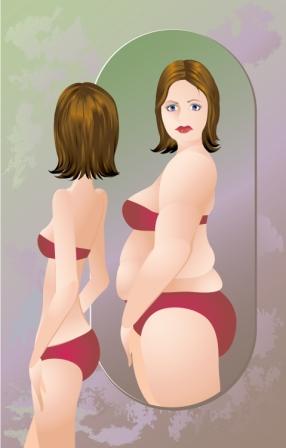
Eating disorders are exhibited through various behaviors, including binge eating and purging. These harmful eating habits, if not acted upon, can lead to more serious physical and mental health problems like anorexia nervosa and bulimia.

Samuelle Klein Von Reiche image credit: csoregon.wordpress.com

Binge eating is characterized by uncontrollable and excessive consumption of food. Meanwhile, purging, as the name suggests, consists of self-induced vomiting to eradicate food from the body. While different to a certain degree, these two both revolve around one sensation: guilt.

According to Dr. Samuelle Klein Von Reiche and other psychotherapists, binge eaters often feel guilty immediately after an “episode.” They feel ashamed of how much food they ate, causing them to feel depressed. On the other hand, people who purge are pushed by guilt to eliminate the food they eat. They possess depressing thoughts of how fat they are or how unattractive they look. These thoughts influence them to continue their dangerous habit of purging.

Samuelle Klein Von Reiche image credit: < eatingdisorderhelpcucamonga.wordpress.com

Negative feelings like guilt are what psychotherapists work on. Through psychotherapy sessions and methods like cognitive-behavioral therapy, psychologists identify patients’ dysfunctional thought patterns, attitudes, and beliefs. By doing so, psychotherapists can come up with strategies to alter these negativities so that patients can feel better about themselves, hopefully eliminating the psychological burdens they are harboring.

Learn more about Dr. Samuelle Klein Von Reiche by visiting this website.